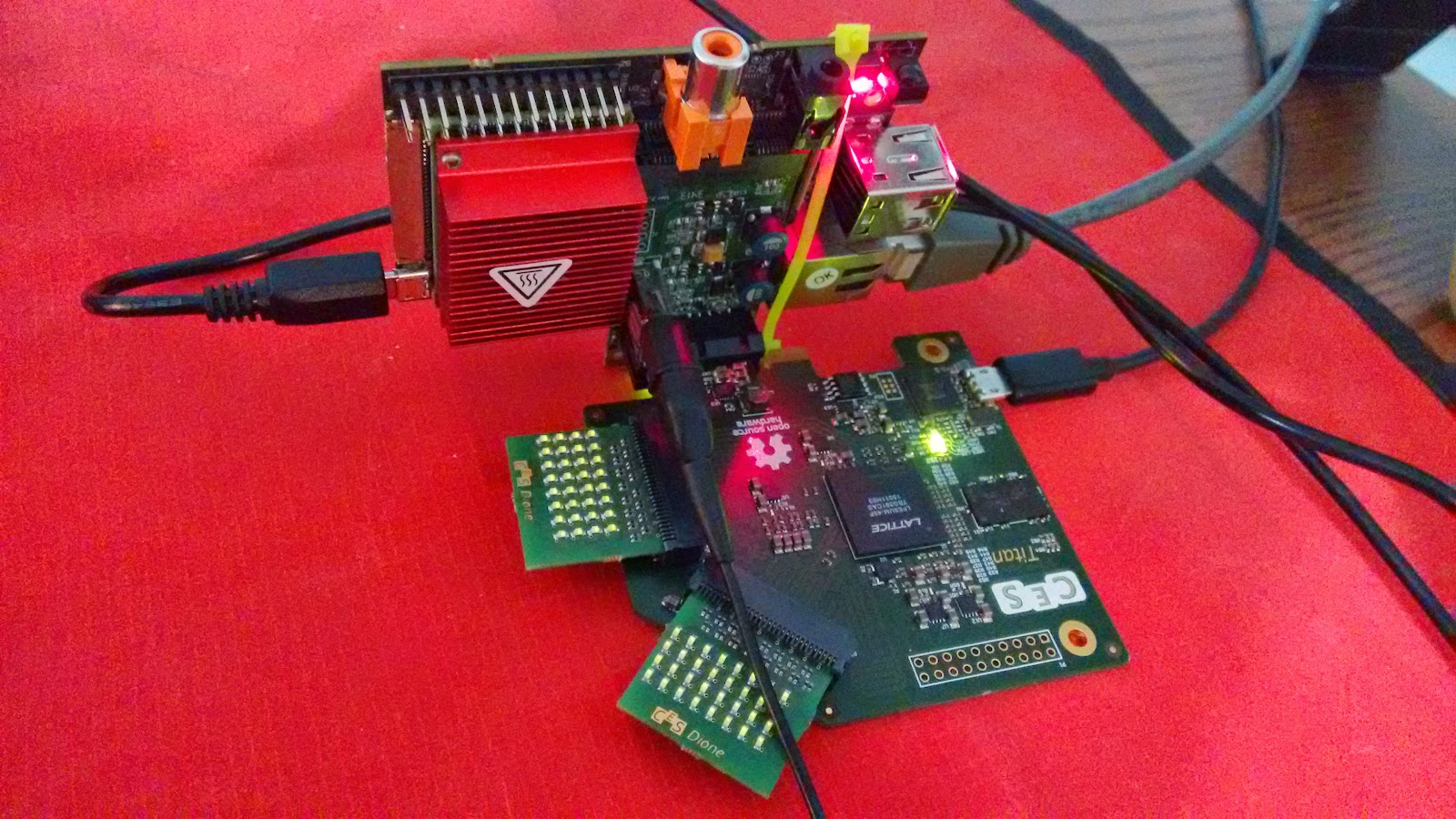
The initial build and board testing when so well, I was surprised when I started having intermittent problems with the USB JTAG circuit. After looking into USB signal quality, the FT2232H circuit on Titan, and tool issues, I decided that the principle problem was with my PC. I was using Macbook that ran Windows 7 virtually, and a native Windows box seemed more stable.
Unfortunately, when I started to test the SPI flash, I encountered intermittent issues again. The errors varied from failure to identify the SPI flash to intermittent boot failures. While I was at the World Cup, Kevin graciously agreed to debug the problem. He decided to focus on the SPI booting problem exclusively, since it was limited in scope and excluded potential issues with the PC, USB, or JTAG. He confirmed that Titan does not have any power sequencing mistakes and that the part should be booting from flash.
After checking with Lattice, I decided to run another test that validated that the SPI flash was not being accessed too quickly; The SPI flash that I currently have installed cannot be read for 30us after it's VCC (supply voltage) rises to its minimum operating voltage. I probed the SPI flash to monitor the delay between the 3.3V rail going active and the first SPI_CSn (chip select) access. The time before the first SPI access was 16ms which is well outside the 30us requirement.
While monitoring the SPI transactions, I noticed something odd. SPI_CSn and SPI_MOSI were always present, but SPI_CLK was missing at times. This meant that the ECP5 was correctly entering SPI boot mode, and a single signal was the culprit. The only plausible explanation for SPI_CLK disappearing was a connection problem beween the ECP5 and the SPI flash. Since PCBs from PCB-Pool are electrically tested, I began to suspect a solder joint issue. I tried squeezing the ECP5 aganst the PCB and SPI_CLK appeared (Figures 1-3).
I took Titan to a local contract manufacturer and had them X-Ray the ECP5, replace it, and then X-Ray the newly installed part. As Figures 4-5 show, the ECP5 was twisted ever so slightly. I had a similar issue in the past, and I updated my manual reflow profile to prevent it. Apparently I was only preventing gross twisting, but this more subtle twist was a lot harder to detect without an X-Ray.
This demonstrates the problem of working on a new design while also developing a process for prototyping it. I have improvements coming that should eliminate this problem. A colleague is assembling a low volume pick and place machine that I ordered, and I have a controller on the way for my oven. I'll post more about these soon. This was a frustrating problem, but now Titan is almost validated!
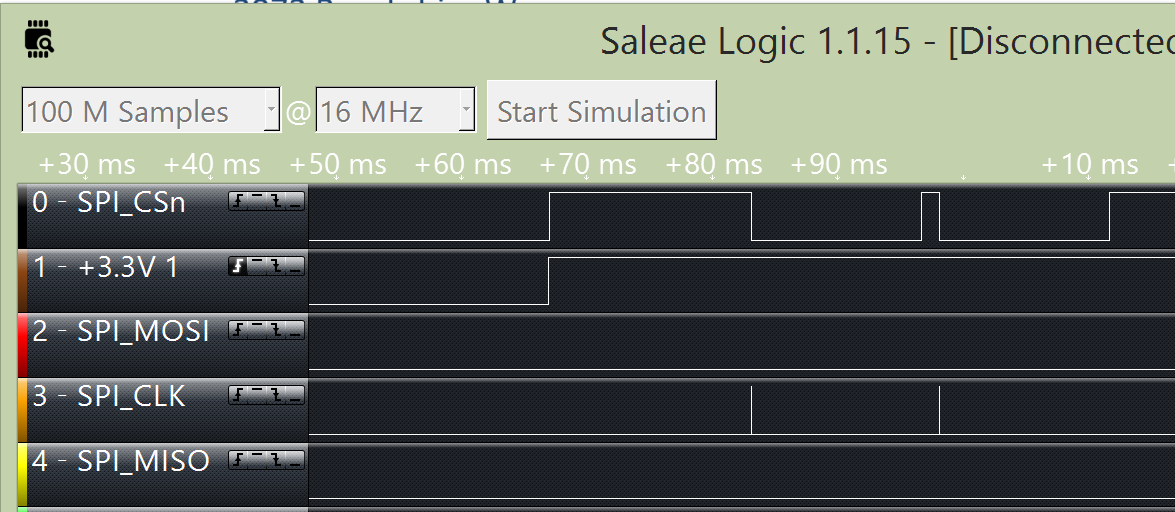 |
| Figure 1. Failed SPI Boot. |
 |
| Figure 2. Failed SPI Boot Attempt with Thumb Pressure on the ECP5. |
 |
| Figure 3. Successful SPI Boot with Thumb Pressure on the ECP5. |
 |
| Figure 4. X-Ray Image of the ECP5 IC as Originally Installed. |
 |
| Figure 5. Close-up of Figure 4 with a PCB Pad Marked in Blue and a BGA Ball in Red. |
 |
| Figure 6. X-Ray Image of the Newly Installed ECP5. |